


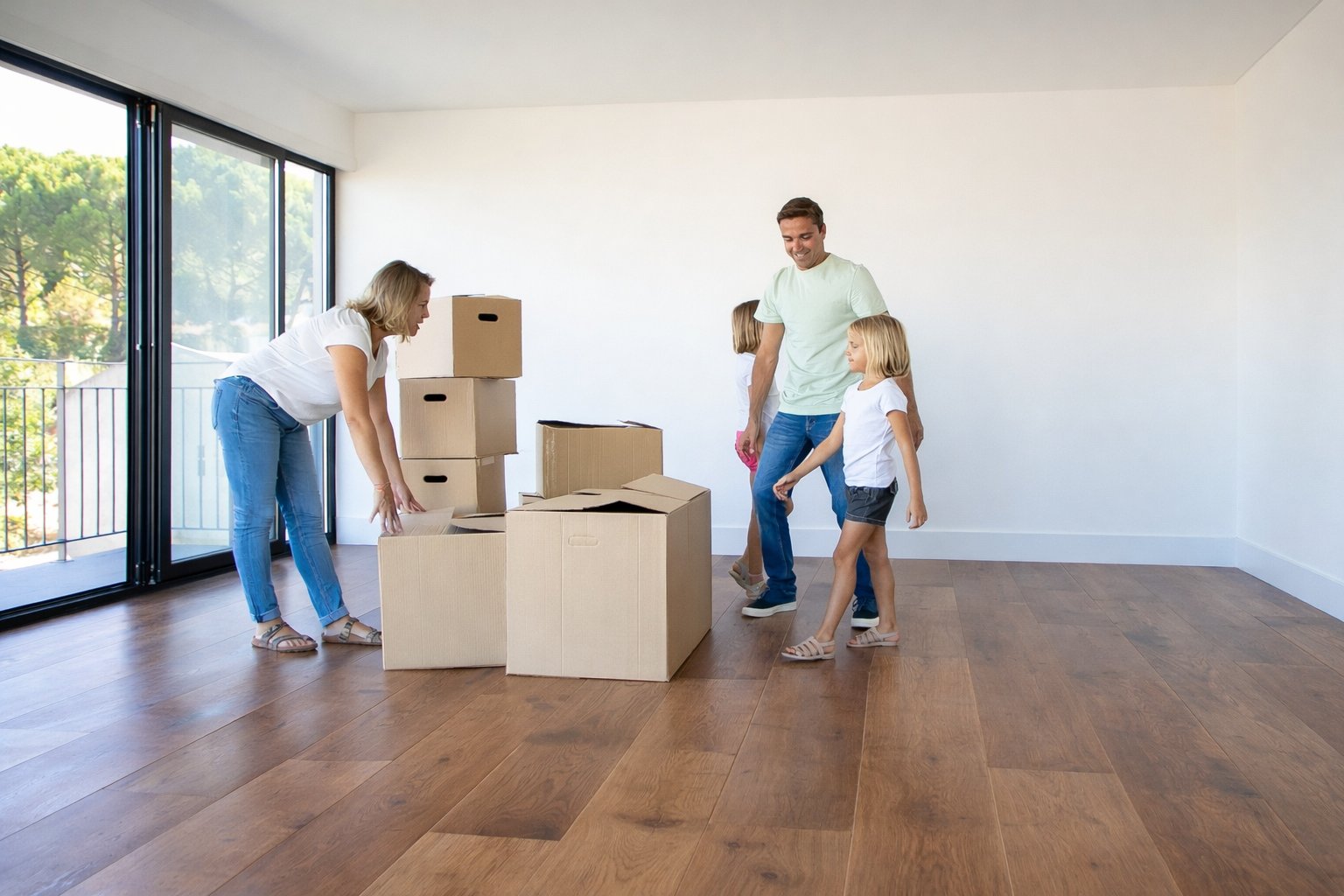
Walk through enough San Bernardino homes right now and a pattern starts to emerge. The ultra-dark espresso floors that dominated a decade ago are getting refinished. The very light whitewashed planks that followed them are being reconsidered. And in their place, something in the middle is showing up again and again.
Mid-tone hardwood is having a real moment in the Inland Empire, and it is not hard to understand why once you see it in person. This is the range of warm honeys, caramel browns, and natural tawny oaks that sit comfortably between the two extremes that defined the last fifteen years of hardwood trends. Homeowners who spent years chasing the next big thing in floor color are landing here, and a lot of them are staying.
If you are weighing your solid and engineered hardwood options for a San Bernardino home, this is a trend worth paying close attention to before you commit.
What exactly counts as mid-tone hardwood?
Mid-tone hardwood falls in the color range between light natural finishes and dark stained floors. Think of a classic golden oak, a warm amber hickory, or a natural walnut that has not been pushed too dark. These floors carry the actual color of the wood rather than masking it with a heavy stain in either direction.
The defining quality of a mid-tone floor is that it feels like wood. There is warmth and depth to it. The grain reads clearly. It does not try to mimic concrete or bleached driftwood, and it does not disappear into shadow the way very dark floors can in certain lighting conditions.
The problem with the extremes
To understand why mid-tone is coming back, it helps to understand what pushed homeowners away from it in the first place.
Dark floors became popular because they read as luxurious and dramatic in staged photos and design magazines. In real life, they show every piece of dust, every pet hair, every footprint. In a dry climate like San Bernardino where fine particulate settles daily, a dark floor can feel like a full-time job to keep looking presentable.
Very light floors followed as a reaction. They felt fresh, airy, and Scandinavian-inspired. But light floors have their own maintenance burden. Scuffs and wear patterns show up more visibly over time, and the cool gray undertones that many light floors carry can clash with the warm, sun-drenched interiors that feel natural in Southern California homes.
Mid-tone hardwood sidesteps both problems. It hides everyday dirt and debris better than dark floors, shows wear less obviously than very light floors, and tends to complement the warm light that comes through most IE windows throughout the day.
Why San Bernardino specifically makes a good case for it
There is something about the light quality in the San Bernardino area that works particularly well with mid-tone hardwood. The region gets a lot of direct sun, and that sun shifts from cool morning light to intense afternoon heat throughout the day. A floor with warm undertones handles those transitions gracefully. It does not turn orange under midday sun the way some golden finishes can, and it does not read cold or gray on overcast days the way whitewashed floors sometimes do.
Homes in the area also tend to have a mix of traditional and transitional architecture. Ranch-style homes, older craftsman builds, and newer tract homes all share the neighborhood in San Bernardino, and mid-tone hardwood works across all of them. It is not so contemporary that it clashes with traditional trim and cabinetry, and it is not so traditional that it feels out of place in a home with modern finishes.
What it pairs with in real interiors
One of the practical reasons designers and flooring experts push mid-tone hardwood is how well it plays with everything else in a room.
White and off-white walls, which are the most common wall color across Inland Empire homes, look clean and balanced against a warm mid-tone floor. The floor adds warmth without competing with what is above it. Dark furniture grounds the space. Light furniture lifts it. Both work.
Tile transitions, which come up constantly in San Bernardino homes where kitchens and bathrooms often have ceramic or porcelain floors, tend to be easier with mid-tone wood than with either extreme. A warm-toned tile coordinates naturally with caramel or honey hardwood, while very dark or very light wood can create transitions that feel jarring rather than intentional.
Species that deliver the mid-tone look best
Not every wood species naturally lands in the mid-tone range, and the species you choose affects more than just color. It shapes the grain character, the hardness of the floor underfoot, and how the wood behaves over time in a home that gets real use.
Red oak in a natural or lightly enhanced finish is the classic entry point. It has warmth, a visible but not overwhelming grain, and it is one of the hardest-wearing domestic species available. White oak, depending on the stain applied, can also land beautifully in the mid-tone range with a slightly more contemporary grain character.
Hickory at a natural finish is rich and varied, with dramatic color shifts within a single plank. That variation reads as character rather than inconsistency, and it tends to hide the kind of real-life wear that accumulates in high-traffic households. American walnut at a lighter finish sits at the warmer end of mid-tone and brings a sophistication that works well in more formal living and dining areas.
The brands making mid-tone easy to find
Finding the right shade within the mid-tone range is much easier when you have quality manufacturers working with the right wood and finish combinations. The flooring brands we carry include lines from Hallmark Floors and Mohawk that both have strong mid-tone hardwood offerings worth exploring. Seeing them side by side in person makes the difference between similar shades much clearer than comparing photos online.
When hardwood is not the right call
Mid-tone hardwood is compelling, but it is still real wood, and real wood has limits. Homes with significant moisture exposure in certain rooms, subfloor conditions that are not ideal for hardwood installation, or budgets that need more flexibility may find that a mid-tone laminate flooring option delivers a very similar visual result with added durability and a friendlier price point. Modern laminate technology has come far enough that the visual difference is genuinely small in many cases, and for some households it is simply the smarter choice.
That is a conversation worth having with someone who knows both products well, rather than defaulting to one without understanding the full picture.
The bottom line
Mid-tone hardwood is not making a comeback because homeowners have run out of ideas. It is making a comeback because it works. It works in the light conditions common to San Bernardino. It works with the architecture found throughout the city. It works in homes where real people live, which means it handles daily life without demanding constant attention. And it carries a timeless quality that the trend extremes on either side of it simply do not have.
Sometimes the right answer was never very far away.
Bring the hardwood conversation to your doorstep
Choosing a floor color is one of those decisions that looks completely different once it is in your actual home. We can come to you with samples through our shop at home service, so you can see exactly how mid-tone hardwood looks under your light, next to your walls, before committing to anything. Stop by and see us in San Bernardino, Yucaipa, or Upland, or schedule a time and we will come to you.


