


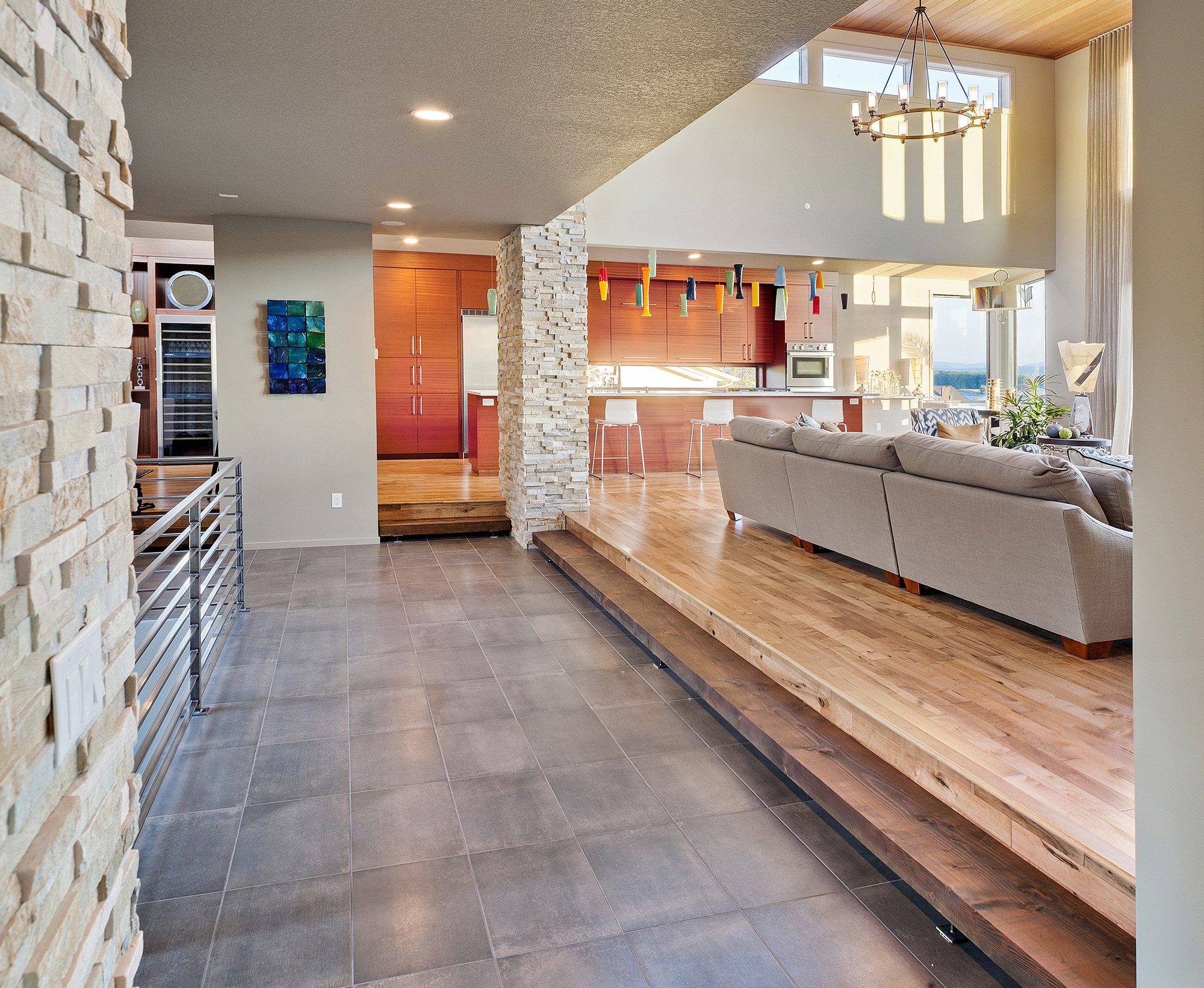
At a Glance: Transitioning from hardwood to tile or carpet requires matching color undertones (warm vs. cool), balancing textures, and avoiding clashes in sheen or heavy patterns. Use neutral tiles or plush carpets with coordinating transition strips to keep your home's layout flowing naturally.
Hardwood flooring adds timeless elegance, warmth, and natural beauty to your home. However, transitioning from hardwood to a different flooring type in adjacent rooms can be tricky. Choosing the right complementary material keeps your home’s layout flowing naturally and elevates your overall aesthetic.
Why Complementary Flooring Matters
Pairing the wrong flooring next to hardwood breaks the visual flow of your home, making your rooms feel disconnected. Selecting a material that complements your hardwood's color, texture, and style prevents abrupt visual stops and creates a unified design.
Matching Tones for Harmonious Transitions
Coordinating undertones keeps room-to-room transitions natural and cohesive:
Warm Hardwoods: Pair golden oak, cherry, or warm brown woods with tiles or carpets in warm, earthy hues.
Cool Hardwoods: Pair gray, ash, or whitewashed woods with sleek modern tiles or cool, muted carpets.
Blending Textures for Natural Balance
Hardwood flooring has a distinct grain and texture. Balance that natural character with materials that complement rather than compete:
Natural Stone Tile: Adds visual structure next to smooth wood grains.
Textured or Patterned Carpet: Introduces softness while letting the wood retain its spotlight.
How to Pair Tile Next to Hardwood
Tile works exceptionally well next to hardwood in moisture-prone areas like kitchens, bathrooms, and entryways.
Color Considerations: Neutral-toned tiles (beige, off-white, or gray) blend seamlessly with most hardwood finishes. If you choose decorative or patterned tiles, ensure the color palette aligns with the warm or cool undertones of your wood.
Tile Shapes & Sizes: Large-format tiles expand a space, while hexagons and mosaics introduce detailed structure. Position tile layouts to complement the linear directional lines of your wood planks.
Grout Selection: Match your grout to the undertone of your hardwood to smooth the transition line.
Combining Carpet and Hardwood
Carpet brings softness and comfort to bedrooms and living spaces, offering a warm contrast to hard surface flooring.
Plush Neutral Carpets: Create a cozy feel while letting your wood floors take center stage.
Patterned Carpets: Add subtle visual interest—just choose low-contrast patterns that will not overpower the natural wood grain.
Transition Strips: Install coordinating trim or transition strips between carpet and wood for a clean, professional finish.
What to Avoid When Pairing Flooring
Clashing Sheens: Do not place high-gloss tile or polished stone directly against matte-finish hardwood.
Competing Patterns: Avoid pairing heavy tile patterns with aggressive wood grain patterns like strong oak or hickory.
Drastic Style Shifts: Keep rustic materials with rustic wood, and sleek modern finishes with contemporary wood tones.
Explore Flooring Options at Wally’s Carpet & Tile
Finding the right combination of tile, carpet, and hardwood transforms the look and feel of your living spaces.
Visit Wally’s Carpet & Tile showrooms in San Bernardino, Upland, and Yucaipa, CA to explore samples in person, or schedule our shop-at-home service to view options directly in your room's lighting. We proudly serve homeowners across San Bernardino, Yucaipa, Redlands, Beaumont, Riverside, and Rancho Cucamonga.


