


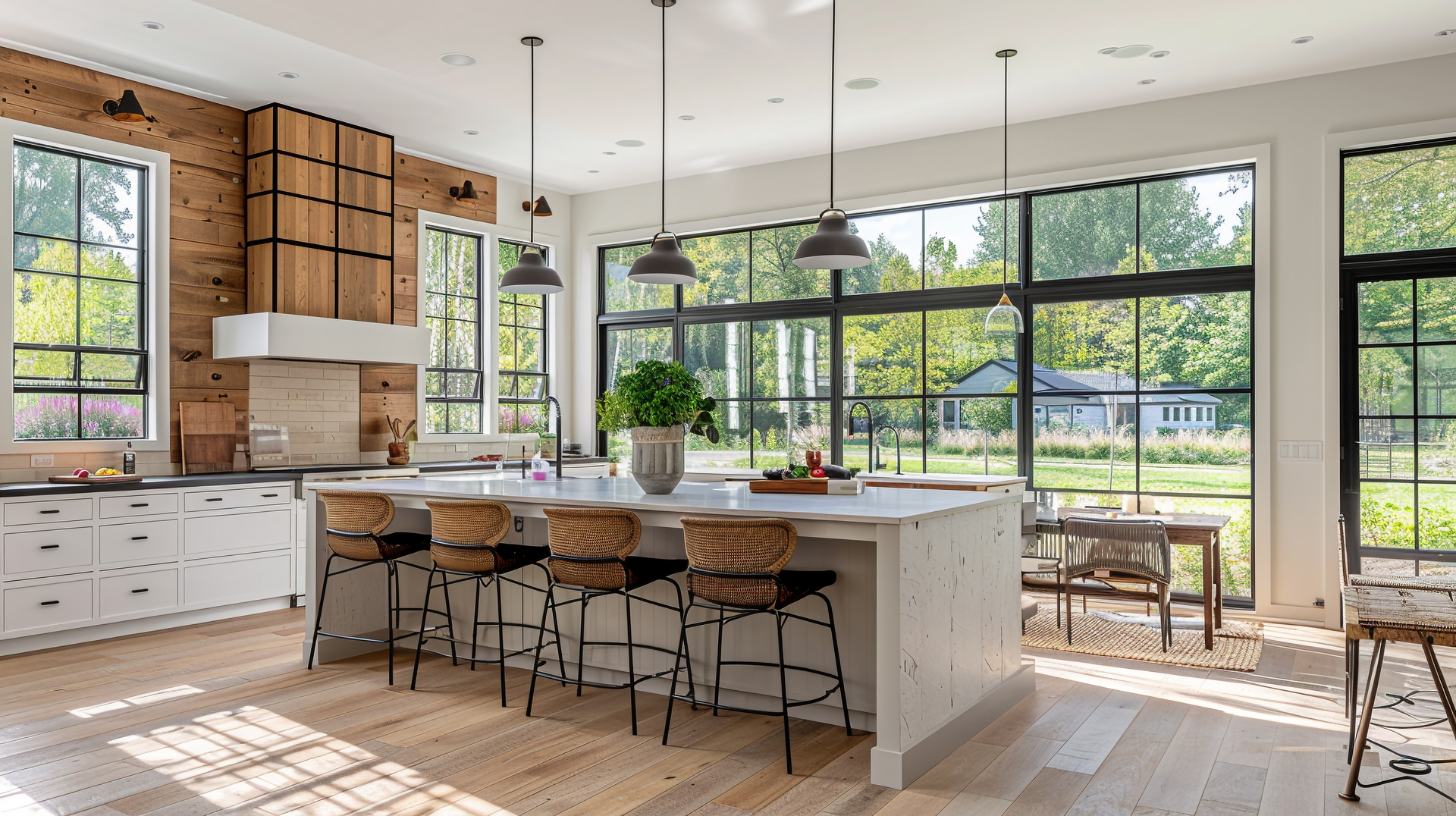
Kitchens are no longer just functional work zones—they are gathering spaces, design statements, and the heart of everyday life. As kitchen design evolves, many homeowners consider extending hardwood flooring into this high-traffic area for a seamless, cohesive look. While hardwood floors bring undeniable warmth and character, kitchens present unique challenges that make this decision worth careful consideration.
Understanding both the benefits and drawbacks of hardwood flooring in kitchens helps homeowners choose with confidence and avoid costly surprises later.
The visual appeal hardwood brings to kitchens
Few flooring options match the natural beauty of hardwood. Its grain patterns, rich tones, and timeless character instantly elevate a kitchen’s design.
Hardwood works especially well in open-concept layouts, where continuity between living areas and kitchens creates a sense of flow. Instead of breaking up spaces with different flooring materials, hardwood ties everything together visually, making the entire home feel larger and more intentional.
For those focused on resale value, hardwood flooring often remains a strong selling point. Buyers tend to view it as a premium feature, even when installed in kitchens.
Comfort underfoot and everyday warmth
Kitchens are spaces where people stand for long periods—cooking, prepping, entertaining, and cleaning. Hardwood feels warmer and more forgiving underfoot than tile or stone, making daily kitchen routines more comfortable.
In colder months, hardwood retains warmth better than many hard-surface alternatives. For homes with radiant heating systems, hardwood can also be a compatible and comfortable option when installed properly.
How hardwood handles spills and moisture
One of the most common concerns about hardwood in kitchens is water exposure. Spills, splashes, and humidity are part of everyday kitchen life, and hardwood does not tolerate moisture as easily as tile or luxury vinyl.
Standing water can seep into seams, causing swelling, cupping, or warping over time. This risk increases near sinks, dishwashers, and refrigerators with ice makers. While quick cleanup minimizes damage, kitchens demand consistent attention to moisture control.
Engineered hardwood often performs better than solid hardwood in kitchens due to its layered construction, which offers greater dimensional stability. Choosing the right product makes a meaningful difference in long-term performance.
Maintenance expectations compared to other kitchen floors
Hardwood floors require thoughtful maintenance in kitchens. Grit, crumbs, and dirt should be swept regularly to prevent surface scratching. Spills need prompt attention, and harsh cleaners should be avoided.
While hardwood can be refinished if it becomes worn or scratched, refinishing a kitchen floor often requires temporary disruption to cabinets and appliances. This makes preventative care especially important.
In contrast, materials like tile or waterproof vinyl tend to be more forgiving when it comes to moisture and heavy cleaning. Hardwood rewards care but does demand consistency.
Durability in a high-traffic environment
Kitchens see constant foot traffic, chair movement, and dropped utensils. Hardwood can handle daily activity, but not all species or finishes perform equally.
Harder wood species and durable finishes stand up better to dents and scratches. Matte and satin finishes help disguise wear more effectively than high-gloss options. Area rugs and mats placed strategically near sinks and work zones can significantly reduce wear while adding style.
When installed and maintained correctly, hardwood can last for decades—even in kitchens—but durability depends on smart product selection.
Cost considerations and long-term value
Hardwood flooring generally comes with a higher upfront cost than many kitchen flooring alternatives. Material quality, installation complexity, and finishing all influence the final investment.
However, hardwood’s longevity and ability to be refinished can offset initial costs over time. Instead of full replacement, refinishing allows kitchens to be refreshed as styles change.
For homeowners focused on long-term value rather than short-term savings, hardwood remains a compelling option.
Situations where hardwood may not be the best fit
Certain households may find hardwood less practical in kitchens. Homes with frequent spills, young children, pets, or limited time for maintenance might benefit from more water-resistant options.
In these cases, wood-look alternatives can deliver a similar aesthetic with greater moisture protection. Understanding lifestyle demands is just as important as choosing a beautiful floor.
Balancing beauty with practicality
Installing hardwood floors in kitchens is not a one-size-fits-all decision. The appeal lies in its warmth, elegance, and ability to unify a home’s design. The trade-offs come in moisture sensitivity and maintenance needs.
With the right product, professional installation, and realistic expectations, hardwood can perform beautifully in kitchens for many years. The key is balancing design goals with how the space is actually used.
Thinking about hardwood floors in the kitchen?
At Wally’s Carpet & Tile, hardwood decisions are guided by real-life use, not just showroom looks. Serving San Bernardino, Yucaipa, Upland, and surrounding Inland Empire communities since 1954, our family-owned team offers expert guidance, professional installation, and honest recommendations. Stop by one of our locations or schedule a shop-at-home consultation to explore hardwood options that truly fit the way your kitchen is used.


