


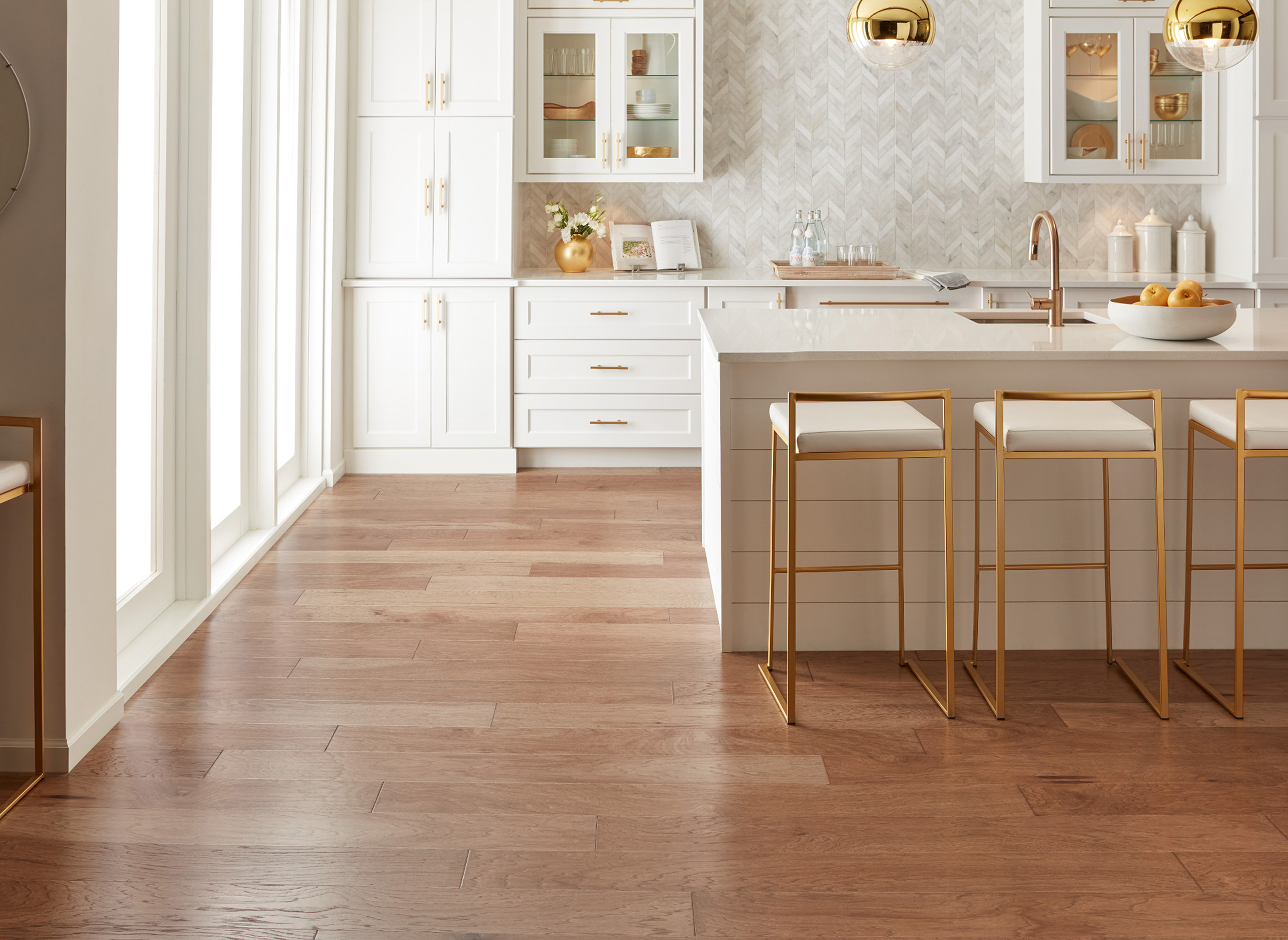
Most homeowners hear the words "hardwood flooring" and picture warm grain, golden tones, and that satisfying solid feel underfoot. What they rarely picture is a steel ball being pressed halfway into a plank of wood in a lab. Yet that little test, repeated thousands of times on every species you can imagine, is the reason we can compare oak to hickory to walnut with any real confidence. It is called the Janka hardness scale, and once you understand it, choosing hardwood gets a lot less mysterious.
The Inland Empire sees plenty of busy households, sun-soaked rooms, and active families, which means floors here earn their keep. We at Wally's Carpet & Tile have been a family-run flooring company since 1954, with showrooms in San Bernardino, Yucaipa, and Upland, plus shop-at-home service for Rancho Cucamonga and surrounding communities. The Janka number is one of the most useful tools we share with customers, because it turns gut feelings into facts you can stand on.
How the Janka scale actually works
The scale is older than most floors in your neighborhood. It was developed in 1906 by an Austrian wood researcher named Gabriel Janka, and the test itself is refreshingly simple. A small steel ball is pressed into a piece of wood until it sinks exactly halfway in, and the pounds of force needed for that simple feat is the Janka rating. Higher numbers mean harder wood, which generally means better resistance to dents, scratches, and the daily traffic of real life.
What the numbers actually tell you
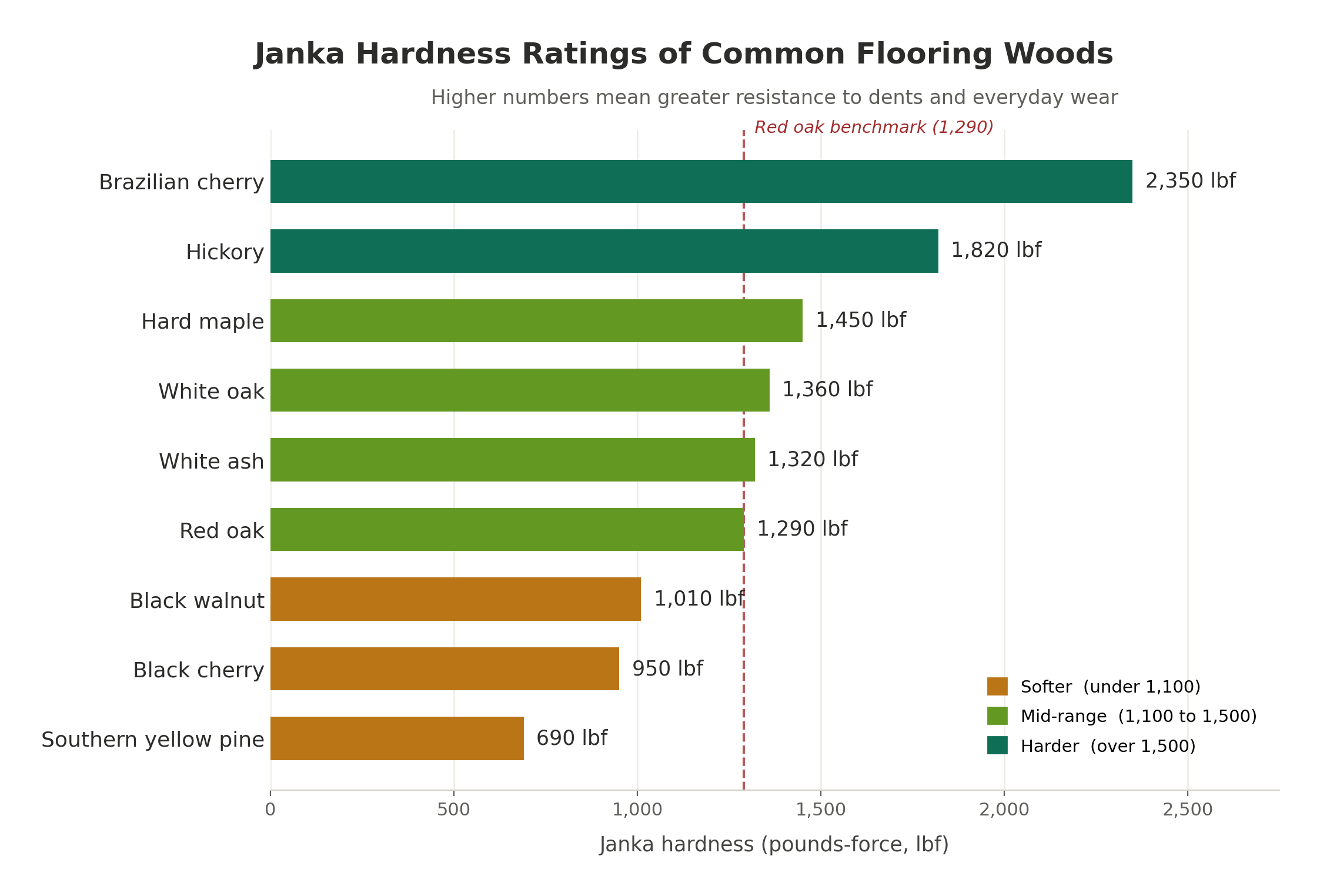
A Janka rating is a comparison tool, not a grade. A wood at 1,000 lbf is not "bad" and a wood at 2,000 lbf is not "twice as good;" the number simply tells you how that species behaves under pressure. Red oak sits near the middle of the chart at 1,290, which is exactly why it has become the everyday benchmark for hardwood flooring across American homes. When you hear that a species is "twice as hard as oak," that oak number is what they mean.
Popular species and where they land
Walking through the scale gives you a feel for your options. American walnut comes in around 1,010, prized for its rich color even though it sits on the softer side, while red oak holds steady at 1,290 and white oak edges higher at 1,360. Hard maple climbs to 1,450, and hickory pushes well past most domestic species at 1,820. Exotic woods like Brazilian cherry land near 2,350, while ipe, sometimes called Brazilian walnut, tops the chart at a remarkable 3,680.
Matching hardness to how you live
Here is where the number starts to matter for your actual home. Families with large dogs, busy kids, or rolling office chairs usually benefit from species in the harder ranges, since the floor faces more impact each day. Quieter rooms, formal dining areas, or primary bedrooms can comfortably handle softer species, where the gentler look and feel often becomes part of the charm. Sunlight, humidity swings, and the way wood is finished all play a role too, which is why a thoughtful conversation matters more than picking the highest number on a chart.
Why your installer matters as much as the species
Even the hardest wood in the world will struggle if it sits on a subfloor that is not ready for it. Plank length, grain direction, acclimation time, and moisture readings all influence how the finished floor performs over the years. This is where professional flooring installation earns every cent, since the right technique gets the best out of a softer species and unlocks the full performance of premium hardwoods. Pairing the right Janka rating with the right install crew is the formula behind floors that look beautiful a decade in.
Find the hardwood that fits your home
Choosing hardwood is part numbers and part instinct, and we love walking customers through both. Reach out to our team and we will help you weigh species, hardness, finish, and lifestyle until the right floor comes into focus. Bring your questions, your photos, and your favorite spots in the house. We will take it from there.


