


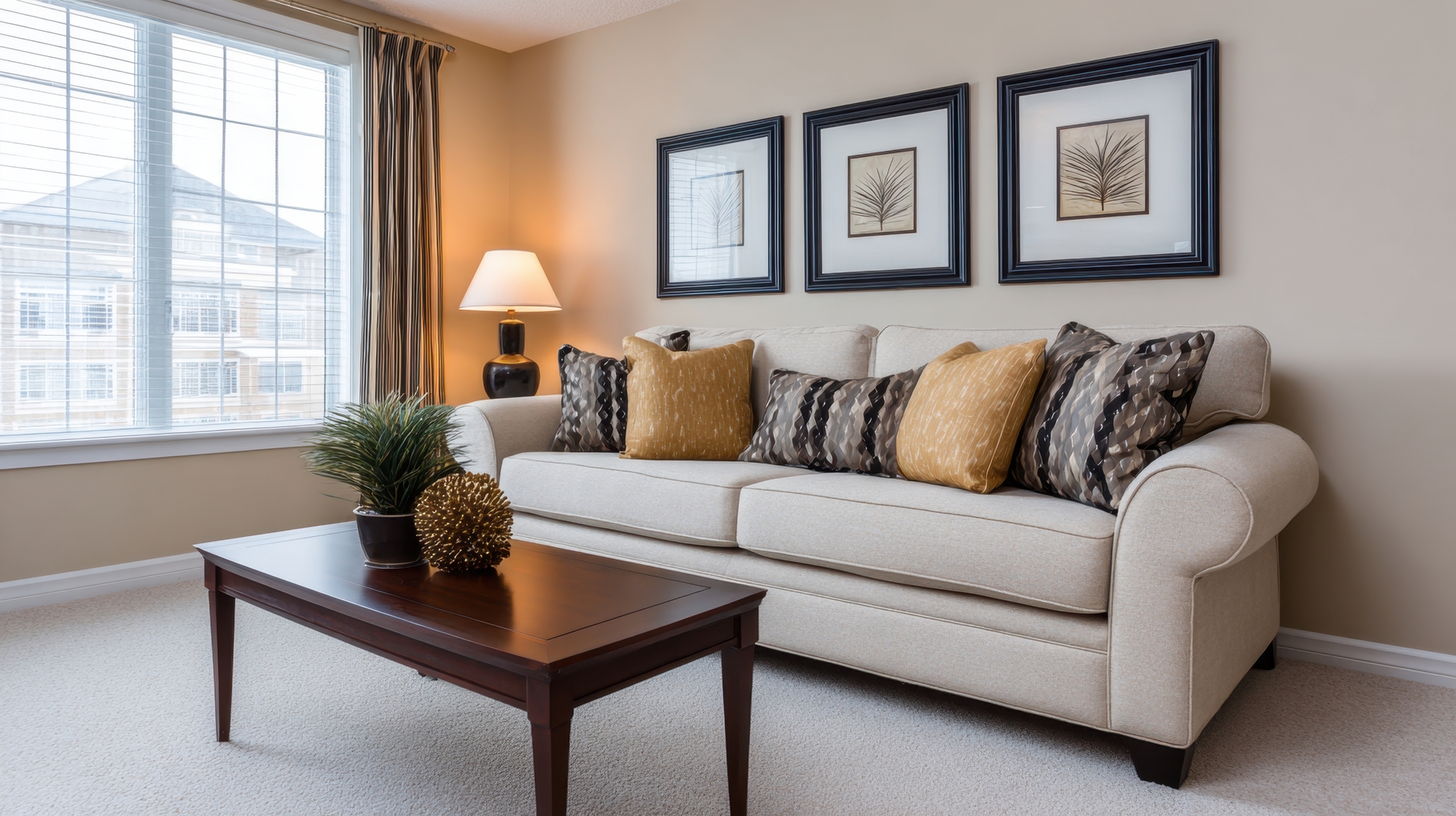
For a while, carpet was the floor covering everyone was trying to move past. Hardwood, tile, luxury vinyl — these were the materials that defined modern Inland Empire homes, and for good reason. They are durable, easy to clean, and hold up beautifully in a climate that can be rough on materials. But something has been quietly happening in the design world, and living rooms are right at the center of it.
Carpet is making a serious comeback. Not the tired, builder-grade stuff from decades past, but thoughtfully chosen, designer-approved carpet that anchors a room the way nothing else quite can. If you have been on the fence about it, here is why the conversation is worth having.
The design world changed its mind about comfort
There was a stretch of years when interior design leaned hard into the minimal and the cold. Rooms that looked like they were staged for a magazine shoot rather than lived in. Polished surfaces, clean lines, and not much softness anywhere underfoot.
That era is giving way to something warmer. Designers are now talking openly about comfort as a design value, not just aesthetics. And when you start thinking about comfort as a priority, carpet flooring has a strong argument. It is softer underfoot than any hard surface. It absorbs sound. It holds warmth in a room. It makes a living space feel like a place you actually want to sink into at the end of the day.
What today's carpet looks like in real rooms
The hesitation most people have about carpet in living rooms comes from a mental image that is at least twenty years out of date. Today's designers are working with a completely different product and applying it in ways that feel current and intentional.
Rich color as a foundation
One of the more exciting shifts is how designers are treating carpet color. Rather than defaulting to safe beige or gray, they are choosing carpet as the color anchor of the room. A deep, warm terracotta. A moody forest green. A soft dusty blue that ties together everything above it. When the floor carries color with confidence, it changes the whole energy of the space.
Texture doing the heavy lifting
Where pattern used to be the go-to for visual interest, texture is now the move. Dense cut piles, subtle friezes, looped constructions with dimension — these give a room depth and warmth without demanding attention. The effect is quiet but noticeable, especially in afternoon light when texture becomes almost architectural.
Carpet alongside hard surfaces
A living room does not have to be all one thing. Designers are increasingly pairing carpeted living areas with hard surface flooring in adjacent spaces — a tiled entryway, a hardwood dining area nearby. The contrast helps define zones naturally without needing walls or furniture to do that work. Done well, it feels layered and considered rather than mismatched.
Why it makes sense specifically in the Inland Empire
Living in San Bernardino, Yucaipa, Upland, or Rancho Cucamonga means dealing with a climate that is hot, dry, and often dusty. Hard floors in those conditions can feel relentless — the dust and debris that settle on a hard surface are visible constantly and feel like a losing battle.
Carpet captures those particles and holds them until you vacuum, which means less visible grime recirculating through the room every time someone walks through. For families with kids running in from outside or pets tracking things across the floor, that difference in day-to-day cleanliness is genuinely meaningful.
And the technology behind modern carpet has come a very long way. Stain resistance is now built into the fiber itself on many products, not just applied as a surface treatment that wears off. The options available today are engineered to handle real family life. Take a look at the carpet styles we carry to get a sense of the range, from hardworking everyday performers to plush, luxurious options for rooms that deserve something special.
Getting scale and placement right
One thing that separates a designer's approach from a guesswork approach is thinking carefully about scale. An area rug in the center of a room is a nice touch, but it is not the same as wall-to-wall carpet. When carpet runs edge to edge, it unifies the room, makes the space feel larger, and removes visual competition between the rug and the furniture.
In open-concept homes, which are common across newer IE builds, this matters even more. Carpet can do the work of defining the living room within a larger shared space without any physical barrier. That is a design move that is both functional and elegant.
Seeing it in the context of your own home
One of the best arguments for carpet is one of the harder ones to make in text: how it actually feels to walk into a room that has it. The quiet. The give underfoot. The way it makes a room feel finished and inhabited rather than staged and waiting.
If you want to see what different carpet styles look like in real completed rooms before you commit to anything, our flooring inspiration gallery is worth spending some time with. Seeing carpet in actual living rooms across different styles and color palettes makes the decision a lot easier.
The verdict
Carpet in the living room is not a step backward. It is a choice that more designers, flooring experts, and homeowners are making deliberately because it delivers something hard surfaces cannot: genuine warmth, quiet, and softness in the room where families spend most of their time together. The materials have never been better, the design possibilities have never been broader, and the case for carpet has never been stronger.
Let's find the right fit for your living room
At Wally's Carpet & Tile, we have been helping Inland Empire families make confident flooring decisions since 1954. Our flooring experts are here to guide you through the selection and installation process from start to finish, with no pressure and no guesswork. Stop by one of our showrooms in San Bernardino, Yucaipa, or Upland, or let us come to you.


