


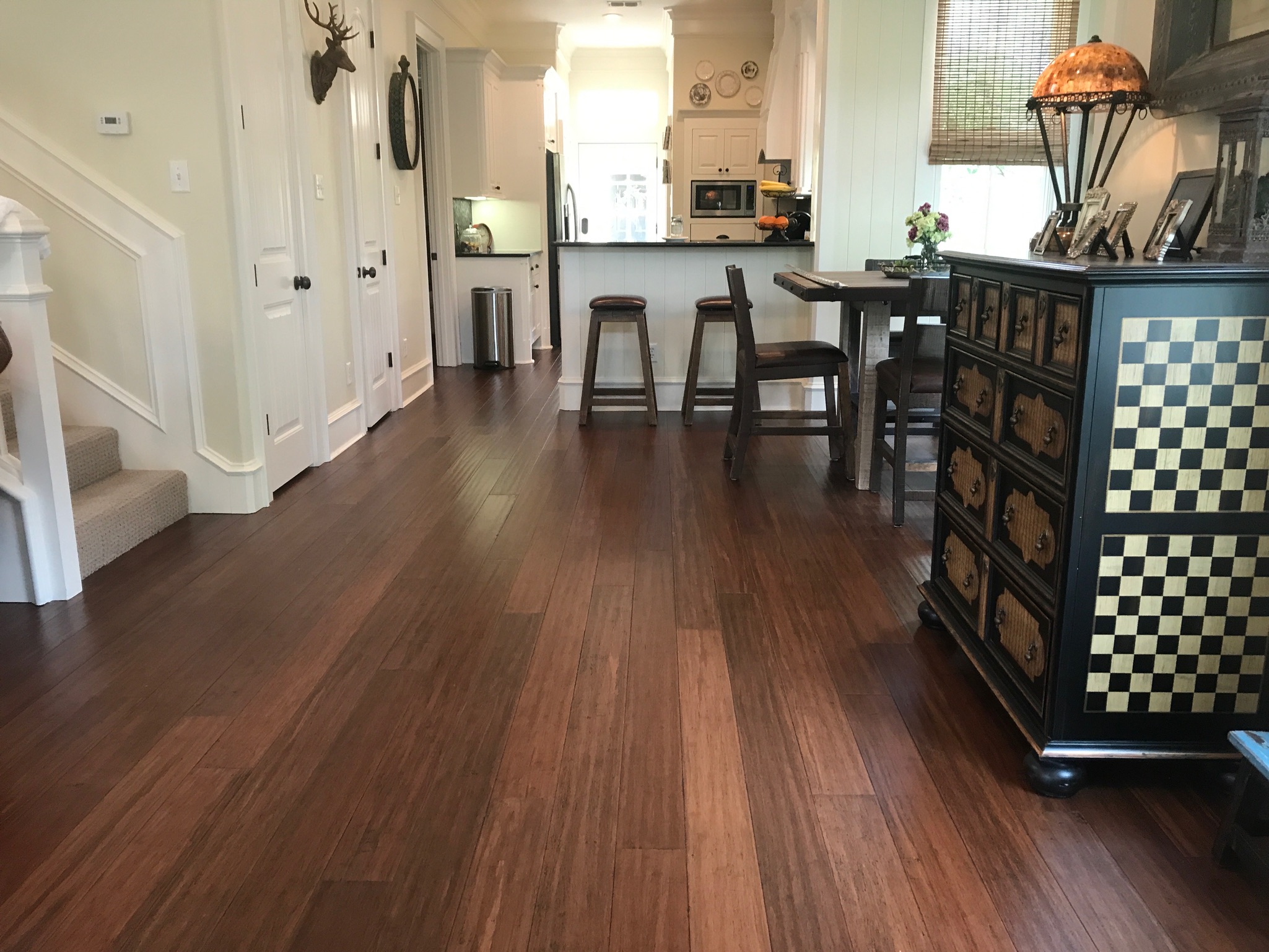
Anyone planning a hardwood floor renovation eventually lands on the same question. Should the planks arrive already stained, sealed, and cured from the factory, or should raw boards be installed and finished right there on the floor of your home? Both routes lead to a gorgeous wood floor, yet they shape the project, the timeline, and the long-term care in very different ways.
We at Wally's Carpet & Tile have been guiding Inland Empire homeowners through that choice since 1954. With showrooms in San Bernardino, Yucaipa, and Upland, plus shop-at-home visits across Rancho Cucamonga, our team has walked customers through every shade of hardwood flooring under both finishes. Here is what really sets prefinished and site-finished apart once the work begins.
Two paths to the same beautiful floor
Prefinished and site-finished hardwood start from the same raw material. Both use real hardwood, milled to identical standards and laid with the same proven techniques. The split happens at the finishing stage, and that one difference ripples through nearly every other part of the project.
What prefinished hardwood brings to the table
Prefinished planks arrive at your door already stained, sealed, and cured under factory conditions. The aluminum oxide topcoats baked on at the mill are typically tougher than any finish that can be applied in a living room. That durability also means a floor you can walk on the very same day it goes down.
Homeowners often lean toward prefinished for several reasons:
- Faster project timelines, since no sanding or curing happens onsite
- Minimal dust and fumes during installation
- Factory warranties on the finish, often lasting 25 years or more
- Consistent color from board to board, straight out of the box
- A subtle beveled edge that highlights every plank
The case for site-finished planks
Site-finished boards arrive raw. After your installer lays them down, the whole floor is sanded smooth, stained to your chosen color, and sealed in place. The result is a perfectly flat surface with no micro-grooves between planks. That seamless look feels custom because it genuinely is.
Site finishing also opens the door to specialty stains, two-tone borders, and precise color matching to existing wood elsewhere in the house. Heirloom dining tables, older additions, or staircases that need to blend perfectly are easier to honor when the finish goes on after the boards are in place.
Timeline, dust, and disruption
A prefinished install in an average room often wraps up in a single day, with the family back to normal almost immediately. Site-finished projects take longer because the sanding, staining, and curing all happen inside your home. Plan on several days where the room sits empty and the air carries finish fumes.
Containment matters here too. Modern crews use vacuum-equipped sanders and low-VOC finishes, but dust still travels. Households with kids, pets, or anyone sensitive to chemistry often find prefinished simply easier to live through.
Care, repairs, and refinishing down the road
Both floors can be refinished, but the experience is different. Site-finished floors sand back smooth across the entire surface because there are no beveled edges to navigate. Prefinished planks can be refinished too, though those bevels tend to soften and the factory-grade durability cannot be fully replicated at home.
For day-to-day repairs, prefinished tends to win on small jobs. A damaged board can usually be swapped out without touching the rest of the floor. Site-finished floors typically need a wider section refinished to blend a single repair seamlessly.
Compare both finishes in person
Choosing between prefinished and site-finished hardwood becomes far easier when you can see, feel, and compare samples side by side. Stop into one of our showrooms or schedule a shop-at-home visit, and our flooring experts will help you weigh the look, the timeline, and the long-term care against your renovation goals.


