


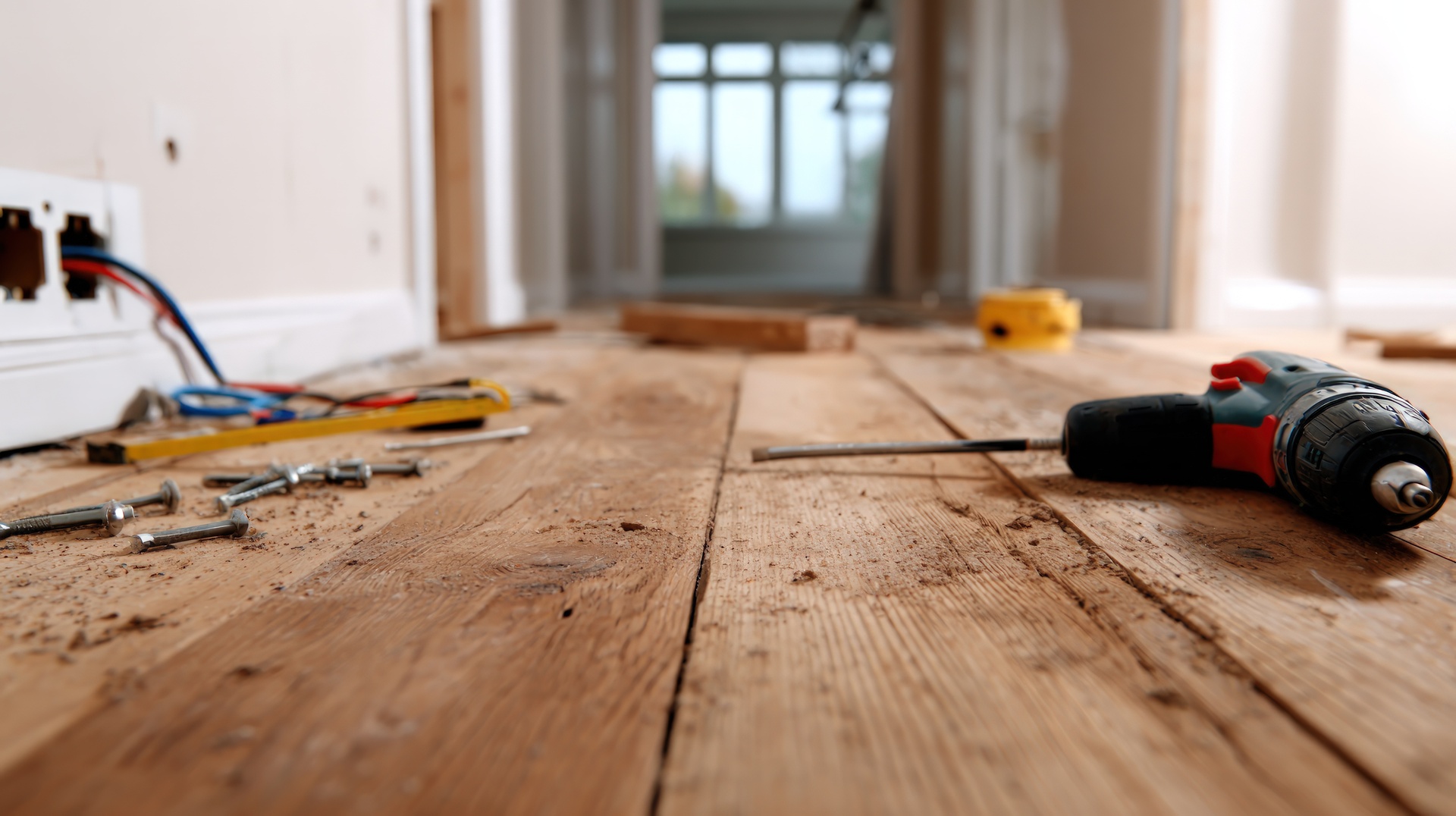
Older homes across Upland carry a lot of charm, but the flooring underneath often tells a different story. Many of these homes were built decades ago, long before today’s materials, moisture barriers, and installation standards became common practice. Over time, everyday wear, shifting foundations, and outdated subfloor systems can create flooring issues that are more than just cosmetic.
Understanding the most common repair problems found in older Upland homes helps homeowners recognize early warning signs and make smarter repair or replacement decisions before small issues become major disruptions.
Foundation movement showing up at floor level
One of the most frequent flooring problems in older Upland homes comes from subtle foundation movement. Even slight shifts can translate directly into visible floor damage. Cracks in tile, gaps between hardwood planks, or vinyl seams pulling apart often point back to movement beneath the surface.
Homes built on slab foundations may show tile cracking in straight or stair-step patterns, while raised foundations can lead to uneven or bouncy floors. These issues rarely fix themselves and usually worsen over time, making professional evaluation essential before repairs begin.
Aging subfloors causing squeaks and soft spots
Subfloors in older homes were often built with materials that have long since reached the end of their lifespan. Plywood and plank subfloors can weaken due to age, moisture exposure, or insect damage. When this happens, homeowners may notice squeaking, flexing, or soft areas underfoot.
Carpeted rooms often hide these problems the longest, while hardwood and laminate make them more obvious. Repairing the surface flooring without addressing subfloor deterioration usually leads to recurring issues, which is why experienced installers focus on what’s happening below the finished floor.
Moisture damage that wasn’t obvious at first
Upland’s climate may be drier than coastal areas, but moisture damage is still common in older homes. Past plumbing leaks, poorly sealed bathrooms, or outdated crawl space ventilation can introduce long-term moisture problems that slowly break down flooring materials.
Warped hardwood, bubbling vinyl, discolored grout, and loose tiles are all signs of moisture exposure. In many cases, the original installation lacked modern moisture barriers, allowing water vapor to move freely into flooring materials. Proper repairs often require drying, sealing, or replacing affected subfloor sections before new flooring can be installed.
Outdated tile installations losing their bond
Tile flooring in older Upland homes frequently suffers from adhesion issues. Many early tile installations used thinset and setting methods that don’t meet today’s standards. Over time, tiles can loosen, hollow out, or crack due to inadequate bonding or subfloor movement.
Loose tiles are not just a visual issue—they can become trip hazards and allow moisture to seep underneath, accelerating damage. Repairing isolated tiles may work temporarily, but widespread bond failure often signals the need for a more comprehensive solution.
Hardwood floors showing gaps and cupping
Hardwood flooring adds character to older homes, but age brings its own challenges. Seasonal expansion and contraction, combined with decades of wear, can lead to visible gaps between boards. In other cases, cupping or crowning occurs when moisture levels fluctuate unevenly.
Older hardwood installations often lack acclimation practices used today, making them more vulnerable to environmental changes. Repairs may involve board replacement, refinishing, or moisture control measures to stabilize the floor long-term.
Carpet issues tied to worn padding and tack strips
Carpet problems in older homes often stem from what’s underneath rather than the carpet itself. Padding compresses over time, losing its support and causing carpets to wrinkle, ripple, or feel uneven. Aging tack strips can also break down, making it difficult for carpet to stay properly stretched.
While re-stretching may offer a temporary fix, long-term performance usually requires replacing worn padding and securing new tack strips to ensure a smooth, safe surface.
Vinyl and laminate separating at seams
Many older Upland homes feature early-generation vinyl or laminate flooring that wasn’t designed for long-term durability. Over time, seams can separate, edges may curl, and planks can lift due to temperature changes or moisture exposure.
These materials were often installed without expansion gaps or proper underlayment, leading to premature failure. Repairs can be challenging, as matching discontinued products is difficult, making partial replacement or full upgrades a more practical solution.
Repairs that reveal bigger hidden issues
One of the biggest challenges with flooring repairs in older homes is uncovering hidden problems once work begins. Rotting subfloors, termite damage, uneven joists, or outdated adhesives may only become visible after flooring is removed.
This is why experienced flooring professionals approach repairs cautiously, inspecting the structure and recommending solutions that address the root cause—not just the visible damage.
Choosing repair versus replacement wisely
Not every flooring issue requires full replacement, but older homes often benefit from a long-term perspective. Spot repairs may solve immediate problems, while comprehensive updates can improve safety, durability, and comfort for decades to come.
Understanding common repair problems helps homeowners make informed decisions and avoid repeating the same fixes year after year.
Schedule a professional flooring repair consultation for your Upland home
At Wally’s Carpet & Tile, we offer professional flooring repair services for older Upland homes, addressing issues like loose tile, damaged subfloors, worn carpet, and aging hardwood. Our family-run team has served the Inland Empire since 1954, delivering honest evaluations, quality installation, and repairs done right the first time. Visit our Upland showroom or schedule an in-home consultation to discuss flooring repair options with experienced local flooring experts.


