


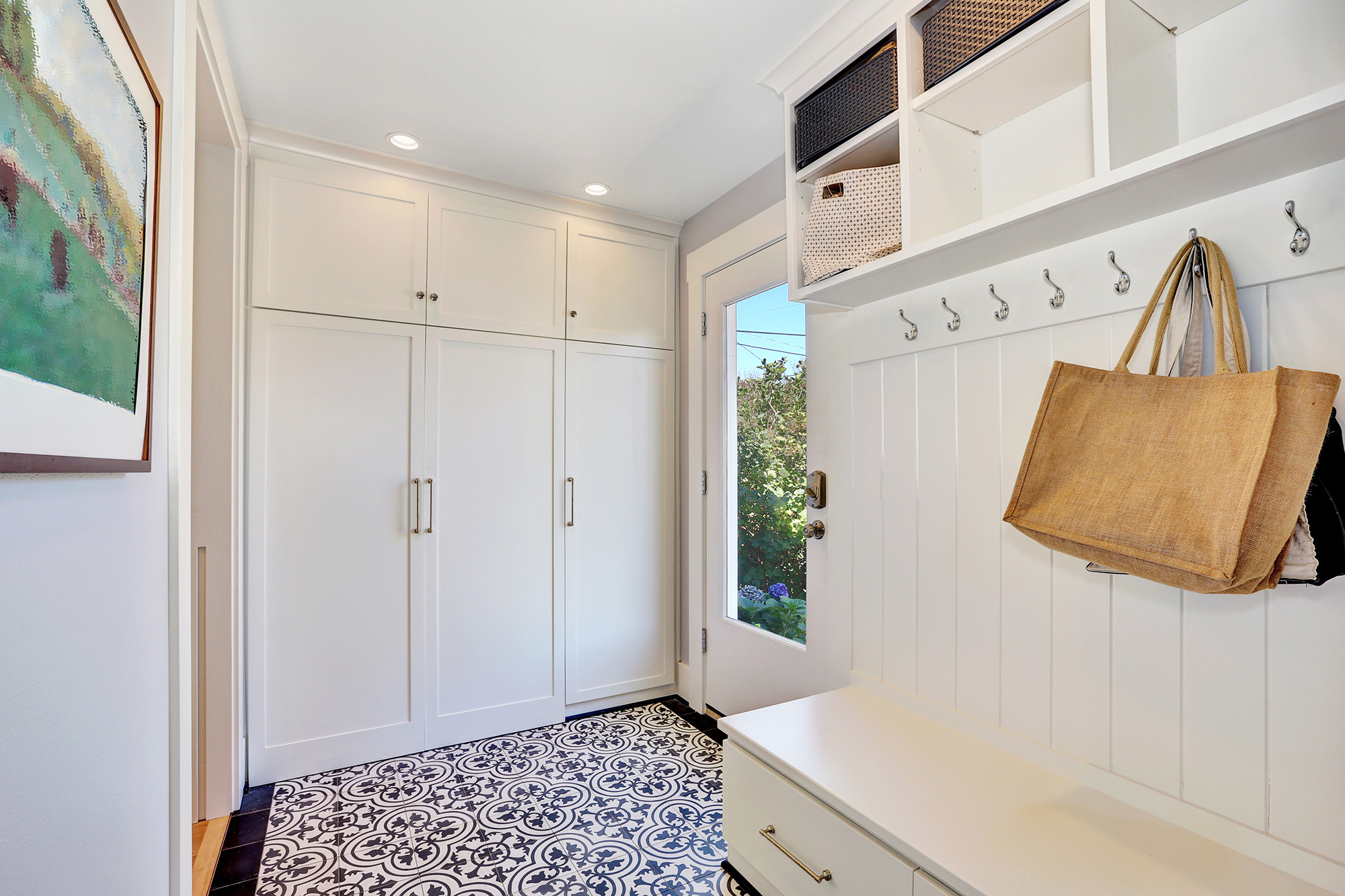
Tile is a mainstay of Inland Empire home design. From classic Spanish Colonial revivals in Redlands to contemporary builds in Rancho Cucamonga and Riverside, tile provides clean lines, low maintenance, and welcome thermal cooling during hot summer months.
However, selecting tile requires navigating local environmental factors: intense summer heat, high UV exposure, patio temperature swings, and pool-area moisture. Understanding the material differences between Ceramic and Porcelain tile ensures your project stands up to these demands for decades.
The Science Behind the Clay: How Porcelain Differ From Ceramic
While both tiles are crafted from clay and fired in kilns, their exact raw materials and manufacturing pressures yield distinctly different products:
Ceramic Tile
Composition: Red, brown, or white natural clay mixed with mineral additives.
Manufacturing: Fired at lower temperatures (around 1,800°F to 2,000°F).
Body Structure: Softer, more porous body with a protective glaze applied to the top surface.
Porcelain Tile
Composition: Refined kaolin clay, feldspar, and finely ground sand.
Manufacturing: Pressed under extreme hydraulic pressure and fired at elevated temperatures (2,200°F to 2,400°F+).
Body Structure: Vitrified, dense body with uniform composition throughout the plank or square.
Thermal Expansion & Solar Resistance in Hot Climates
Summers in San Bernardino, Yucaipa, and Beaumont frequently see temperatures top 100°F. Exterior surfaces and sunlit interior spaces absorb immense thermal energy.
Porcelain’s Thermal Resilience: Because porcelain is fully vitrified during firing, its thermal expansion rate is remarkably low and stable. It resists thermal shock, preventing cracking when rapid ambient temperature drops occur during desert summer nights.
Color Fastness & UV Stability: Porcelain tiles (especially full-body or color-body porcelain) do not fade or discolor under relentless UV rays in sunrooms, covered patios, or large windowed installations.
Moisture & Porosity Comparison
Water absorption dictates where a tile can be safely installed:
Impervious Standard (Porcelain): To earn official certification as porcelain (ASTM C373 standard), a tile must demonstrate a water absorption rate of 0.5% or less. This makes it impervious to standing water, pool runoff, and heavy bathroom condensation.
Water-Resistant Standard (Ceramic): Ceramic tiles carry absorption rates between 3% and 7%. While excellent for vertical wall installations and interior living rooms, unsealed ceramic can absorb moisture over time if submerged or exposed to standing water.
PEI Ratings: Matching Tile Hardness to Traffic
When selecting ceramic or porcelain, check the PEI (Porcelain Enamel Institute) wear rating:
PEI Class 1–2: Light traffic; wall applications, powder room accents, and bathroom walls. (Ideal for ceramic).
PEI Class 3: Medium residential traffic; countertops, guest bedrooms, and low-wear floors. (Ceramic or Porcelain).
PEI Class 4: Heavy residential & light commercial traffic; kitchens, entryways, hallways, and main family spaces. (Porcelain).
PEI Class 5: Extra heavy commercial traffic and outdoor patios. (Full-body Porcelain).
Summary Recommendation Matrix
Choose Ceramic Tile For:
Kitchen backsplashes and decorative wall features
Shower walls and tub surrounds
Budget-conscious bedroom or hallway updates
Intricate decorative patterns and glazed wall accents
Choose Porcelain Tile For:
Master bathroom floors and walk-in shower bases
High-traffic kitchens and front entry foyers
Indoor-to-outdoor transitions (patios, sunrooms, covered porches)
Homes with pool access or heavy outdoor foot traffic
Let Wally’s Carpet Handle Your Tile Renovation
Whether you need light, airy ceramic wall tiles for a backsplash or heavy-duty porcelain pavers for a patio remodel, proper surface prep, thinset selection, and layout design are essential.
Wally’s Carpet offers an extensive gallery of natural stone, wood-look, and large-format porcelain and ceramic tiles. Visit our local showrooms in San Bernardino, Yucaipa, or Upland, or contact us to schedule an in-home measurement and design consultation!